

The Mind Is the First Casualty: What Air Force SERE Psychology Teaches Civilians About Surviving Anything
On April 18, 1995, an F-15E fighter jet went into an uncontrolled dive over the Atlantic Ocean. Capt. Brian Udell had seconds to make a decision. At nearly 780 miles per hour, moving faster than sound, he pulled the ejection handle. The parachute opened with a shock that felt, in his words, like being hit by a train. He was alone, badly injured, in 60-degree water with five-foot waves, at night, thousands of feet from anyone who could help him.

What Udell did next is the entire subject of Chapter 4 of Air Force Handbook 10-644, the U.S. Air Force's official manual on survival, evasion, resistance, and escape — better known as SERE. He didn't panic. He ran a checklist. He found his life preserver shredded and his arm injured, so he hauled in his life raft with his good arm and his teeth. He treated his own wounds, drank from his emergency water supply, and fought to stay warm for four hours in open ocean before a Coast Guard helicopter found him — guided in by his own radio call.
The handbook doesn't tell this story to impress you. It tells this story to make a point that changes everything about how you should think about emergencies: tools and training only work if your mind is still working too. A person who panics with a full survival kit can die. A person who stays clear-headed with almost nothing can live.
Chapter 4 backs this up with four real cases, and together they make the point from every angle. There's Udell, above. There's a missionary held hostage in the Philippines who kept searching for a way out even after his captors had already killed other prisoners. There's an Australian sergeant who crawled through the desert for four days on two broken legs rather than simply wait to die. And there's a fourth case the handbook includes for a very different reason. It is not to show what the will to survive looks like, but what happens when it disappears.
A pilot flying over the Canadian wilderness lost engine power and chose to bring the aircraft down himself, gliding it onto a frozen lake rather than ejecting. He pulled it off. The plane slid to a stop fully intact. He climbed out, checked it for damage, looked around, and spotted a wooded shoreline about 200 yards off. He had available timber, cover, and a real shot at shelter until help came. He started walking toward it. Then, about halfway there, he turned around, walked back to the aircraft, and did not go on. Despite being completely unharmed and having all the tools necessary to survive until search and rescue teams located him, the pilot became consumed by panic, despair, and the sheer vastness of the wilderness. Instead of building a fire or setting up camp, he sat inside the cockpit and committed suicide. A search team reached him less than 24 hours later.
The handbook doesn't try to explain why. It just leaves the question sitting there, because nobody knows the answer. What it uses the case to prove instead is something colder and more useful than any explanation can give. How survivable a situation actually is, and how survivable it feels to the person living it, are two completely different things. And it's the second one that decides what happens next. This man had shelter within reach, materials for fire, and rescue less than a day away. Every physical condition was in his favor. What was missing wasn't a resource. It was the belief that any of it still mattered.
That's what this article translates for civilians. A chapter originally built for military aircrew, infantry, combat arms, and special operations forces who might end up alone, injured, and far from help, turned into something anyone can actually use, whether the emergency is a car crash, a medical scare, a natural disaster, or the everyday ordinary challenges life throws at all of us.
The Will to Survive Isn't a Feeling — It's a Skill
The handbook defines the "will to survive" plainly. The desire to live despite obstacles that look impossible to overcome. It's not bravery, and it's not the absence of fear. It's the decision to keep functioning anyway.
The handbook backs this up with real cases, and one of the most striking involves a missionary named Greg Williams, taken hostage in the Philippines by a terrorist group linked to al-Qaeda. His situation was about as bad as it gets: he'd told almost no one where he was going, so nobody knew where to look for him, and his captors had already killed other hostages. Chained by the ankle inside a cave, he tried digging the anchor bolt out of the rock first with his fingers, then with chicken bones from his meals. When his captors' beatings knocked several of his teeth loose, he pulled one out and used it as a makeshift chisel for two days before he was discovered. He eventually escaped with help from one of his own captors.
The lesson isn't the ingenuity. It's that a man with no tools and almost no hope kept generating options anyway. That's the will to survive in action — and the handbook insists it can be built like any other skill, through preparation, mindset, and practice.
Two Phases Every Crisis Moves Through

The handbook breaks every emergency into two distinct psychological stages, and understanding the difference is one of the single most useful things a civilian can take from this chapter.
The crisis period hits the moment you realize what's happening is real. Most people go into some form of shock here. It is not because they're weak, but because they weren't ready to face this specific moment. Thinking gets disorganized; their judgment gets shaky. The handbook calls this being "controlled by the environment" instead of controlling it. Left unchecked, this can quickly spiral into panic. Two main things are known to pull people out of it fast:
- Having some form of prior training, which gives your hands something familiar to do while your brain catches up,
- In a group, someone stepping into a leadership role to direct and reassure everyone else. Alone, you have to be that person for yourself.
The coping period begins the moment you stop reacting and start deliberately enduring. This is not the same as feeling okay. It's holding yourself together on purpose — sitting tight in a shelter, hungry and cold, when every instinct screams at you to move. The handbook states its sharpest line here without softening it: people rarely die from hunger pains. They die from losing the ability to manage their own emotions and thoughts.
Here's the part worth remembering: crisis periods come back. You don't reach "coping" once and stay there forever. Long emergencies cycle through both stages repeatedly, and every time, the job is the same — recognize you're in crisis, and consciously choose to shift into coping.
Your Four-Step Loop for Staying in Control
Most bad decisions under pressure trace back to one root cause: poor awareness of what's actually happening. The handbook breaks this down into a repeatable loop — practice this now, calmly, and a faster version becomes automatic when you actually need it.
- Observe. Take in what's really happening using every sense you have — sight, sound, even gut instinct. Don't skip this step by jumping straight to conclusions.
- Analyze. Ask yourself directly: what does this mean for me, right now? Don't let assumptions from before the emergency cloud your read of the actual situation in front of you.
- Decide. Weigh your real options, think through the consequences of each, and commit to one. Indecision is itself a decision, and it's usually the worst one available.
- Act, then reassess. Carry out your choice, but stay ready to change course the moment new information comes in. If something goes wrong, don't freeze; start the loop again from step one.
The handbook is honest that in a real crisis, you often won't have time to walk through this slowly. That's exactly why the practice matters now, while nothing is on the line.
What Stress Actually Does to You — and How to Fight Back

Most of Chapter 4 is a practical rundown of what stress does to the human mind, drawn from real survival cases, including an Australian sergeant who bailed out over the desert with both legs injured, and crawled for four days and nights using the stars to navigate, hallucinating by the end before rescuers found him alive.
Pain is a warning, not proof of damage. It's your body telling you to protect an injured part, a signal that sometimes has to be overridden for something more urgent. People have finished fights with broken hands and landed damaged aircraft with burned hands. Intense focus genuinely reduces how much pain you feel.
Thirst lies to you. It tells you that you need water, but not how much. You can dehydrate steadily while feeling only mildly thirsty. So drink before you're desperate, not after.
Cold and heat attack your judgment before your body. Extreme cold makes you want to do anything just to get warm, including abandoning shelter and supplies to go chase heat. Heat's warning sign is weakness rather than numbness. Either one clouds thinking long before it becomes physically dangerous.
Comfort and apathy are quiet killers. The handbook names these as two of the single biggest threats to survival, and both are attitudes, not conditions. Chasing comfort means trading what actually keeps you alive for temporary relief from hunger or discomfort. Apathy is worse because it creeps in slowly: drowsiness, then mental fog, then indifference, then giving up entirely. Watch for it in others: withdrawal, going quiet, losing interest in eating.
Fatigue is partly mental. You feel "done" well before your body actually is. Short, deliberate rest breaks do more good than people expect: partial recovery, saved energy, a mental reset.
Depression often arrives after the danger passes, not during it. This is one of the chapter's most counterintuitive findings. Once basic needs such as food, water, and shelter are handled, that's exactly when there's finally time to sit with your thoughts, and depression creeps in. It feeds on itself: exhaustion deepens depression, depression erodes confidence, and that makes the depression worse. The fix is staying deliberately busy and doing things like checking your situation, your supplies, your surroundings, on a set schedule, whether they need it or not.
Three Emotions That Can End You If You Let Them
Impatience gets a single line in the handbook that hits harder than any explanation could: a survivor who had planned to travel only at night got tired of waiting, left his hiding spot at noon instead, and was captured two hours later. Waiting patiently is a skill, not a weakness.
Fear depends far more on the person than the situation, and it isn't predictable from personality alone. Timid, anxious people have handled real emergencies with remarkable calm. Fear can sharpen your senses or freeze you solid; which one happens is mostly a function of whether you understand what's happening to you and have a plan.
Hopelessness is the one the handbook treats as lethal in its own right. It is not a side effect of danger, but a danger itself. It's the same failure you saw in the frozen lake pilot. An individual with every physical advantage in place, and none of it mattered once the belief that survival was possible had faded. That's what makes hopelessness different from the other stresses in this chapter. It doesn't wear you down. It just convinces you there's no point in resisting the wearing down at all.
What This Doesn't Cover — and What It Does

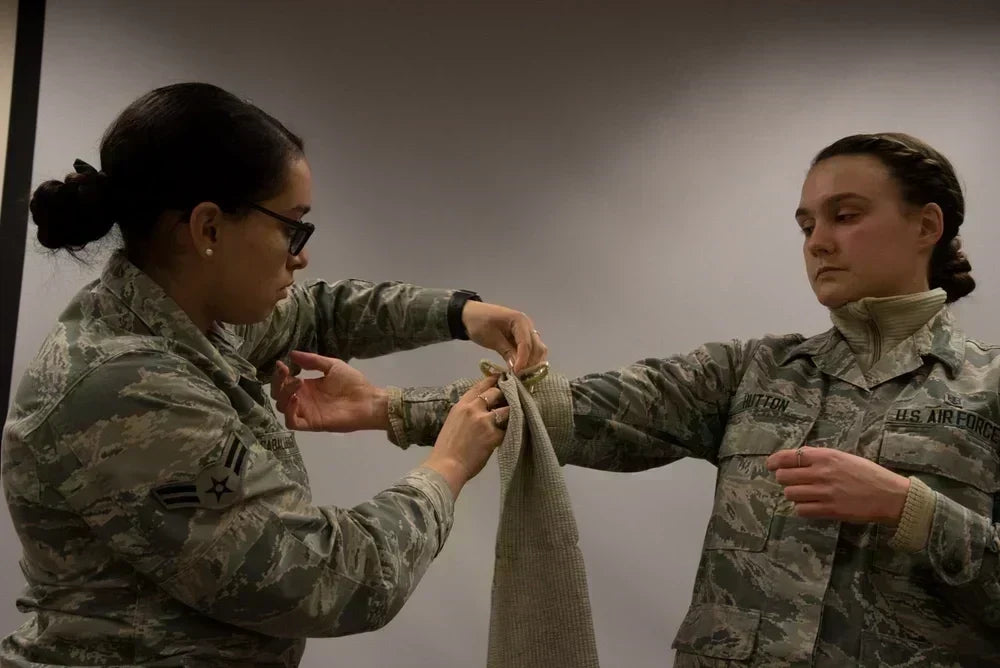
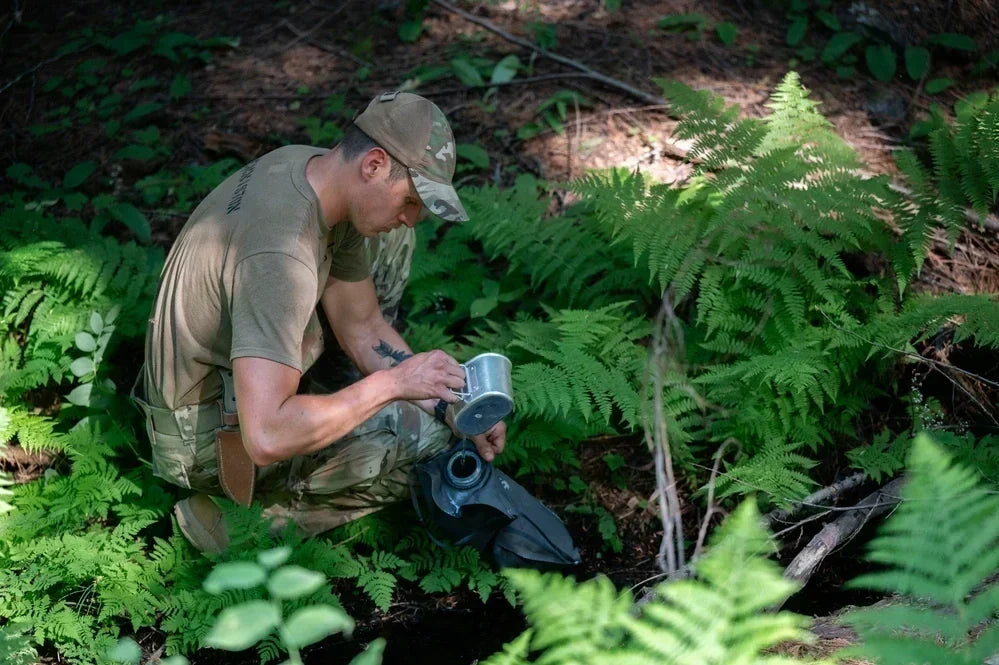
SERE training builds the kind of practical, repeatable skill that turns panic into procedure. (Credit: U.S. Air Force photo by Airman 1st Class Stephanie Orta Carranza | License: Public Domain)
Parts of Chapter 4 deal with captivity. This includes resisting interrogation and coping with a captor deliberately trying to break someone down. That material is genuinely important for the military audience it was written for, and it isn't something to import into ordinary civilian life. No civilian emergency involves an adversary working to control you the way a captor does. (Yes, there could be some one-off scenarios, but we will not dive into that here.)
What transfers almost perfectly is everything else: the crisis-to-coping shift, the four-step awareness loop, the stress catalog, and the recognition that comfort, apathy, and hopelessness are dangers in their own right. None of that requires a uniform; It requires practice.
Build the Mindset Before You Need It
- Learn the four-step awareness loop: observe, analyze, decide, act. Know these well enough to use it without thinking.
- Know the difference between crisis and coping, and expect to move between them more than once.
- Treat comfort-seeking as a warning sign in yourself, not a harmless impulse.
- Watch for the early signs of apathy in yourself and in anyone with you, and interrupt it early with activity and a plan.
- Build in deliberate rest before exhaustion forces it on you.
- Expect depression to show up after the crisis stabilizes, not during it, and plan to stay purposefully busy.
- Decide in advance how you'll handle waiting; impatience has ended more situations than most people realize.
- Remember that how survivable a situation feels and how survivable it actually is are two different things, and trust the second one.
The handbook's closing line on psychology is worth carrying with you: people don't choose their emergencies, and they'd escape them if they could. What they do control is how they respond. It is the response that determines almost everything that happens next. It's never an easy situation. However, it is almost always a survivable one.
This article is educational and translates concepts from AFH 10-644, Chapter 4, "The Psychological Aspects of SERE" (pages 18–39), a publicly available U.S. Air Force handbook. It does not constitute SERE, psychological, or emergency-response certification of any kind. If thoughts of hopelessness or self-harm feel personal rather than academic, please reach out to a doctor, counselor, or a crisis line. That part of the chapter was written for people with no other option, and most of us have other options.


Share:
MEET THE NEEDS: Applying USAF SERE Chapter 3 to Civilian Preparedness
THE SECOND EMERGENCY: What SERE Medicine and Weather Teach Civilians