
FIELD NOTES // FIELDCRAFT
THE DESERT MAKES EVERY MISTAKE EXPENSIVE
What Air Force SERE principles teach civilians about heat, water, shade, signaling, and the decision to stay or move.

The truck quits on a washboard road a little before eleven. A cough, a shudder, then quiet. You step out into heat that is already building. The phone is charged and shows no bars. Behind the seat there is water, a toolbox, a first-aid kit, and a jacket you almost left at home. The paved road is somewhere past that ridge. Six miles, maybe ten. You can’t tell.
This is when most people grab a bottle and start walking. Waiting beside a dead vehicle feels like failure, and walking feels like action. That instinct is the problem. In the desert, movement can be the action that makes the situation worse.
Picture a pilot who walks away from a forced landing in remote desert. The aircraft, training, and rescue system differ, but the problem rhymes: a known site, limited water, rising heat, an uncertain rescue time, and a choice between staying and going. The Air Force calls people in that position isolated personnel, or IP, meaning anyone separated from normal support. This article just calls them drivers, pilots, and survivors. Its backbone is the public Air Force handbook AFH 10-644, which covers survival, evasion, resistance, and escape (SERE) and treats that choice as a decision to be earned, not a reflex (AFH §19.1, pp. 418–419).
QUICK ANSWER
If you are stranded in hot, dry country, stop and control your first reaction. Check everyone for injury and look for immediate hazards such as fire, leaking fuel, moving water or unstable ground. Contact emergency services or roadside assistance when you can, and record your exact location. Use the vehicle or aircraft as shade, a signaling platform and a landmark, but not as a sealed oven. Reduce heat gain, limit exertion, protect your drinking water and make deliberate attempts to be seen and heard. Staying with a safely positioned vehicle is a strong general principle, not an absolute rule. Move only when remaining is more dangerous, or when you know exactly where help is, can reach it with the water and strength you have, and can travel in cooler hours. If you leave, leave a note.
THE DESERT CHANGES THE ORDER
Most survival advice runs shelter, water, fire, food. In hot, dry country the order shifts, and heat goes first because it degrades everything else, including judgment.
The load comes from every direction: direct sun, hot ground radiating upward, low humidity that evaporates sweat before you notice it, and wind that strips moisture. Distances are long and shade is rare. The handbook describes deserts as places of extremes, with long gaps between water and a wide swing between hot days and cool nights (AFH §8.2, pp. 115–120).
Open terrain breeds false confidence. Everything looks close, yet the handbook records survivors who misjudged distance and lost their landmarks (AFH §19.6.3.1, pp. 435–436). A visible landmark is not a reachable landmark, and a clear morning can still end in dust, thunderstorm, or flood.
FIRST ACTIONS: STOP BEFORE YOU MOVE
Stop. Get into the vehicle’s shade, take a small drink, and give yourself a few minutes. The handbook advises letting the shock of the event pass before making big decisions (AFH §19.1.6.2, p. 419). Frantic activity spends water and attention without improving anything.
Then work through a short sequence. Check everyone for injury. Look for fire, fuel, traffic, water, and unstable ground. Save your coordinates. Try 911 or an emergency text where supported, then roadside assistance, a satellite communicator, or a radio. Send one concise message with your location, vehicle, number of people, medical concerns, and plan. Dim the phone to save the battery. Set up shade, inventory your water, medication, and signaling gear, and schedule a reassessment.
THE VEHICLE OR AIRCRAFT IS A SURVIVAL ASSET
A disabled vehicle is more than a ruined trip. It offers shade, a windbreak, storage for water and gear, electrical power while the battery lasts, reflective surfaces and signaling material. It is a bigger target than a person, and it marks your last known location. The handbook notes that wreckage is easier to spot from the air than people walking, and that its parts can supply shelter and signaling aids (AFH §19.1.2, p. 418).
It is not a place to sit sealed up. The handbook warns that the interior quickly becomes superheated (AFH §13.5.6, p. 204). Use the shaded side, rig cover off the vehicle, and keep ventilation open when it is safe.
If you run the engine, respect the exhaust. The CDC notes that leaks can let carbon monoxide build up inside a vehicle and that an open tailgate can draw exhaust in (CDC: carbon monoxide). The symptoms overlap with heat illness, and someone asleep may never notice them.
Staying is not a vow. Leave for fire, leaking fuel, rising water, unstable ground, dangerous traffic, or anyone who makes you feel unsafe, and tell the dispatcher where you went.
CONTROL HEAT BEFORE YOU SPEND WATER
The handbook’s line is to drink water and ration your sweat, not your water (AFH §5.6.1, p. 62). That does not mean sipping like a miser. It means attacking whatever makes you sweat.
Shade first. Get off hot ground and out of direct sun. Handbook shelter guidance holds cover about a foot to a foot and a half above the body so air can cool it, and builds away from rocks that store heat (AFH §13.5.5 and §13.5.12, pp. 204–205). Then slow down. Work in short bursts, rest through the hottest hours, save movement for cooler ones, and skip the digging and gear shuffling that feels productive and isn’t. Keep skin covered with loose, light layers, a hat, and a neck cover. Stripping down takes the full sun and speeds water loss (AFH §12.10, pp. 181–182).
None of this means refusing water. Withholding it while working hard is not conservation. No single quantity suits everyone, because needs change with temperature, effort, body size, health, acclimatization and duration. Drink steadily and cut the activity that causes the loss.
HEAT ILLNESS: RECOGNIZE THE CHANGE BEFORE JUDGMENT FAILS
Heat illness comes in stages, and the CDC separates them clearly (CDC: Heat-Related Illnesses). Heat cramps are painful spasms after heavy sweating; rest in shade, drink water or an electrolyte drink, and skip salt tablets. Heat exhaustion adds heavy sweating, weakness, headache, nausea, dizziness, thirst, and less urine. Move the person out of the heat, cool the head, face, and neck, give sips of cool water, stay with them, and push for medical evaluation. Heat stroke brings confusion, odd behavior, slurred speech, seizures or collapse, and the skin may be dry or sweaty.
Suspected heat stroke is a 911 emergency. Call, start cooling immediately with cold water, wet cloths, and moving air, and follow the dispatcher.
Heat attacks judgment first. A confused person will say they are fine, so in a group someone must recognize that the person is no longer deciding reliably and take over. The 2017 handbook differs from the CDC on details such as salty drinks, rectal temperatures, and immersion (AFH §5.6.2, pp. 62–64). Follow the current CDC guidance.
WATER: PROTECT WHAT YOU HAVE FIRST
Water already in the vehicle is more reliable than any you might find. Protect containers from punctures and leaks, keep them shaded, and split the supply into a working portion and a reserve. Ask each person about medical needs. When water is critically short, skip salty and dry food. If it rains, collect it.
Natural water needs treatment, and treatment has limits. The CDC says boiling kills germs but does not make water with harmful chemicals safe (CDC: water treatment outdoors), and the handbook notes that filtering removes only solids (AFH §16.6.1, p. 283).
Retire the myths. Don’t drink urine, which the handbook says only concentrates waste (AFH §9.4.2, p. 138), or radiator fluid, or alcohol. Don’t cut open cacti, eat unfamiliar plants, or follow animal tracks hoping for water. The handbook describes extreme field-expedient options for trained crews (AFH §16.5.3, p. 281); they are not civilian advice.
STAY OR MOVE: THE DECISION THAT CHANGES EVERYTHING
Staying with a safely positioned vehicle or aircraft is usually the stronger choice, and the reasons stack. Others know your route. A distress message went out. Searchers will look for a vehicle, not a lone walker. The destination is uncertain, and the heat makes walking dangerous. Children, older adults, injured people, or those with medical needs may not be able to cover the distance. Where capture is not a concern, the handbook says staying near the site has helped most survivors recover, and leaving makes sense only when you are certain of your location and of reachable water, shelter, and help (AFH §19.1, p. 418).
Movement is sometimes right: when staying creates an immediate hazard, when a known, occupied place is close and confidently reachable, when you know the route, have the water and strength, can travel in safer temperatures and someone knows your plan. Leave a written note with names, direction, time, and destination (AFH §19.1.6.1, p. 419).
There is no "safe" mileage rule. Mirages, soft sand, rock barriers, and deceptive scale turn a short walk into a long one (AFH §19.6.5, pp. 436–437). The handbook recounts an unnamed Marine pilot who spread his parachute as a marker, walked what he judged to be 500 yards to his crashed aircraft, then spent five days wandering the flat desert looking for the parachute (AFH §19.6.3.1, pp. 435–436).
NAVIGATION IF MOVEMENT BECOMES NECESSARY
If you must go, plan before leaving shade. Confirm your position with offline maps and saved coordinates. Prefer known roads over shortcuts, set a turnaround point and leave a note. Travel in cooler hours; the handbook records ground hot enough to blister feet through shoes, and darkness that hides drop-offs (AFH §19.6.1, p. 434). Rest before symptoms force you to. Mark your route with low-impact signs. Avoid dry washes if storms threaten, because a wash can flood from rain that fell miles away.
SIGNALING AND RECOVERY
Communication sends information to someone. Signaling makes you easier to detect. You want both.
For communication, use 911 or an emergency text where supported, roadside assistance, a satellite communicator, a registered personal locator beacon or, in an aircraft, the emergency locator transmitter. NOAA says beacon registration is free and helps rescuers (NOAA beacon registration).
For signaling, use hazard lights sparingly, high-visibility panels, reflective material, a mirror, whistle, flashlight or strobe, large ground signals, and the vehicle itself with doors or hood open. Use active signals when someone can realistically detect them, and leave passive ones in place. Skip uncontrolled fires and pyrotechnics in dry country. When help arrives, follow the responders (AFH Chs. 21–22, pp. 496–512).
DESERT WEATHER CAN REVERSE THE PROBLEM
After sunset, bare ground gives up heat quickly, and some deserts swing more than 60 degrees between day and night (AFH §12.10.1, p. 181). The National Weather Service warns that dust storms can cut visibility to near zero: pull off the pavement, stop, and turn off the lights. Lightning can strike miles from the rain. If you hear thunder, seek a sturdy building or hard-topped vehicle and wait 30 minutes after the last one (NWS: monsoon safety).

Flash floods are the quiet danger. The NWS says they can occur many miles from the storm that causes them and advises against camping or parking along washes in monsoon season. No one should sleep, shelter, or park in a wash when storms are possible. Go to higher ground, and never drive into a flooded road. The handbook (AFH §19.6.2.2, pp. 434–435) and the National Park Service both warn against canyons and washes when flooding is possible.
SMALL INJURIES BECOME MOBILITY PROBLEMS
Blisters, burns, cuts, dust in the eyes, and a turned ankle can end your ability to walk out. Care for feet early (AFH §12.11, p. 182), keep prescriptions reachable, cover small wounds, protect your eyes, and keep hands and feet out of places you can’t see. Don’t cut a snakebite, suck venom, or tie a tourniquet (CDC). For venomous bites, serious burns, altered mental status, or worsening illness, call emergency services.
THE PSYCHOLOGY OF WAITING
Waiting can feel like failure even when it is correct. The handbook’s psychology chapter treats the will to survive as something managed, not performed (AFH §4.2, pp. 19–21). It warns that panic can start a chain of mistakes, and that survivors often must subdue the urge to travel when travel is counterproductive (AFH §4.5, p. 22).

Give fear a schedule. Break the day into periods: shade, water check, a look at each person, signaling, rest. Inventory your gear and recheck it. Assign simple jobs so nobody sits and spirals, and keep a written log. Skip arguments and impulsive plans, and reassess when new information arrives. The will to survive is not constant action. Sometimes it is the discipline to stay shaded, conserve strength, and remain where rescuers expect to find you.
TWO SHORT SCENARIOS
Scenario one: a disabled vehicle
A driver’s SUV quits on a remote desert road before noon. She has water, a phone with no service, a power bank, a reflective panel, and tools. She checks for hazards, saves her coordinates, sends a text, and dims the phone. A tarp goes up on the shaded side, the panel on the roof, and the water under cover, split between a working supply and a reserve. She rests through peak heat and sips on schedule. By late afternoon, nobody has answered. She reassesses, decides to wait another hour, and does not walk.
Scenario two: a survivable forced landing
A small airplane makes a survivable forced landing in open desert. The occupants clear the wreck first, away from fuel and fire, and treat injuries only within their training. They check whether the emergency locator transmitter is transmitting and use a beacon if they have one. They stay near the aircraft, rig shade from wing sections and seat covers, count water, lay out bright material and a mirror, and decide against a cross-country walk. Nothing heroic happens. Calm decisions are the point.
WHAT DOES NOT TRANSLATE FROM MILITARY SERE
Military SERE material may assume hostile territory, enemy observation, capture risk, tactical concealment, restricted communication, no emergency services, and a rescue system built around military procedure. None of that describes a stranded civilian.
A civilian should become more visible, communicate with legitimate authorities, use roads and rescue systems, and cooperate with responders. This article does not cover evasion, concealment, counter-tracking, captivity, or escape. Reading it is also not training. It doesn’t replace a first-aid course, a navigation class, or practice.
A WORD ON GEAR
Black Label Precision’s FIELD//MOD modular system is meant to let a traveler adapt a loadout to the environment. Equipment only adds capability when it matches the threat, and the person carrying it understands how to use it.
BEFORE YOU ENTER HOT, DRY COUNTRY
- Check the forecast and heat risk.
- Tell someone your route and return time.
- Download offline maps.
- Carry more water than the trip requires, in more than one container.
- Pack clothing for day and night.
- Pack shade material.
- Carry a charged power bank.
- Consider a satellite communicator or registered beacon.
- Carry first-aid supplies and prescribed medication.
- Keep reflective signaling gear within reach.
- Inspect the spare tire, jack, battery, and recovery equipment, and know your safe recovery points.
- Do not exceed the capability of your vehicle or its occupants.
The desert does not require constant action. It requires the correct action in the correct order.
SOURCES AND FURTHER GUIDANCE
Air Force Handbook 10-644: chapters, sections and pages used
Primary source: AFH 10-644, Survival, Evasion, Resistance and Escape (SERE) Operations, 27 March 2017. Page numbers below are the handbook’s printed page numbers. Inline links open the PDF at the matching page (PDF page = printed page + 8). Handbook material is paraphrased.
- Ch. 4, Survival Psychology: §4.2 Will to Survive, pp. 19–21; §4.5 The Coping Period, p. 22 (§4.4 Crisis Period, p. 21, read for context)
- Ch. 5, Health and First Aid: §5.6.1 Dehydration, p. 62; §5.6.2 Heat Related Injuries, pp. 62–64
- Ch. 8, Global Climate Characteristics: §8.2 Dry Climates, pp. 115–120
- Ch. 9, Open Seas: §9.4 Procuring Drinking Water on the Open Seas, p. 137; §9.4.2 Drink Only Conventional Water, p. 138
- Ch. 12, Personal Protection: §12.10 Dry Climates, pp. 181–182 (§12.10.1, p. 181); §12.11 Care of the Feet, p. 182
- Ch. 13, Shelters: §13.5.5 and §13.5.6, p. 204; §13.5.12, p. 205
- Ch. 16, Water: §16.5.3 Cactus as a Water Source, p. 281; §16.6.1 Rendered Potable, p. 283
- Ch. 19, Land Travel and Evacuation Techniques: §19.1 Decision to Stay or Travel, pp. 418–419 (§19.1.2, p. 418; §19.1.6.1 and §19.1.6.2, p. 419); §19.6.1 Day or Night Travel, p. 434; §19.6.2.2 Rocky Plateau Deserts, pp. 434–435; §19.6.3.1 Landmarks, pp. 435–436; §19.6.5 Mirages, pp. 436–437
- Ch. 21, Signaling and Communication; Ch. 22, Recovery: Ch. 21, pp. 496–510; Ch. 22, p. 512 (follow rescuers' instructions)
Current civilian and agency guidance
- CDC / NIOSH: Heat-Related Illnesses. Heat cramps, heat exhaustion and heat stroke recognition and first actions; 911 for suspected heat stroke; no salt tablets.
- CDC: About Heat and Your Health. General heat-safety background (shade, cooler hours, hydration, higher-risk groups). Reviewed; not quoted.
- CDC: Carbon Monoxide. Exhaust leaks, open tailgate, es and symptoms of carbon monoxide exposure.
- CDC: Water Treatment When Hiking, Camping or Traveling. Boiling and disinfecting do not make water with harmful chemicals safe.
- CDC / NIOSH: Venomous Snakes at Work. Do not cut the wound, suck out venom, or apply a tourniquet; get emergency care.
- National Weather Service Phoenix: Monsoon Safety. Dust storms, lightning, flash floods many miles from the storm, washes,s and low-water crossings.
- National Park Service: Death Valley Safety. Limited cell service, satellite communicators, itineraries, avoiding canyons and washes when rain is likely.
- NOAA: U.S. 406 MHz Beacon Registration. Beacon registration is free and helps search and rescue.
National Park Service, Joshua Tree Safety Guidelines (https://www.nps.gov/jotr/planyourvisit/safety-guidelines-for-your-visit.htm) was named in the brief but could not be retrieved during research, so nothing in the article relies on it.
Image credits
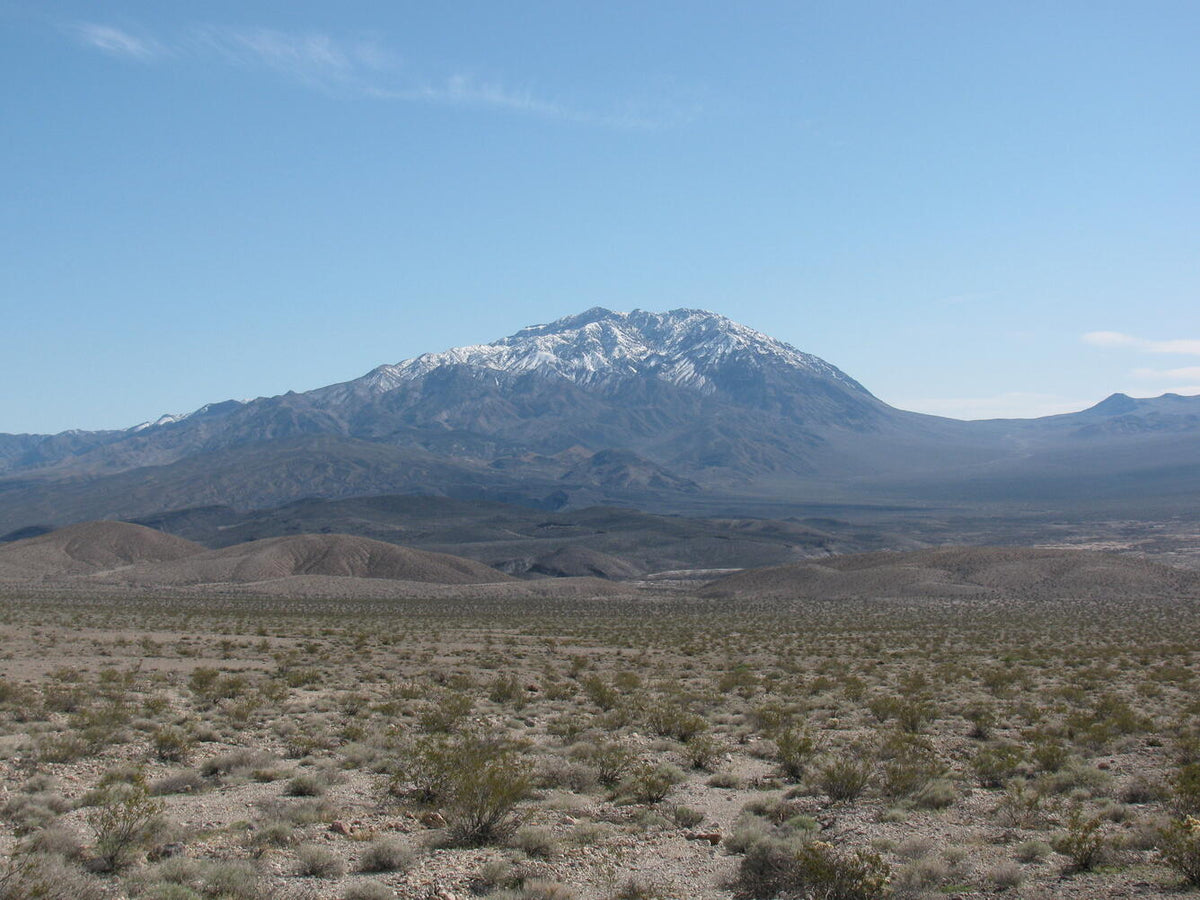
- Mountain and Mojave Desert. Robert Klinger, USGS Western Ecological Research Center (WERC). Source record. Public domain, per the USGS media record.
- Flash flood on the Paria River near Lees Ferry, AZ. Arizona Water Science Center, USGS. Source record. Public domain, per the USGS media record.
- Sunset over the Mojave Desert. California Water Science Center, USGS. Source record. Public domain, per the USGS media record.
This article is general educational information. It is not medical advice, and reading it does not give you first-aid, navigation, aviation, wilderness-survival, or SERE training. Conditions, health, and equipment vary, and no guidance here guarantees an outcome. In an emergency, call 911 or your local emergency number. Black Label Precision is an independent company. The U.S. Air Force, the Department of Defense (War), the CDC, the National Weather Service, NOAA, the National Park Service, and the USGS have not reviewed or endorsed this article or any Black Label Precision product, and their materials are cited only as public sources. Paraphrased handbook material reflects the 2017 edition and may differ from current practice; where it differs from current CDC guidance, this article follows the CDC.
Share:
The Environment Decides What Comes First