
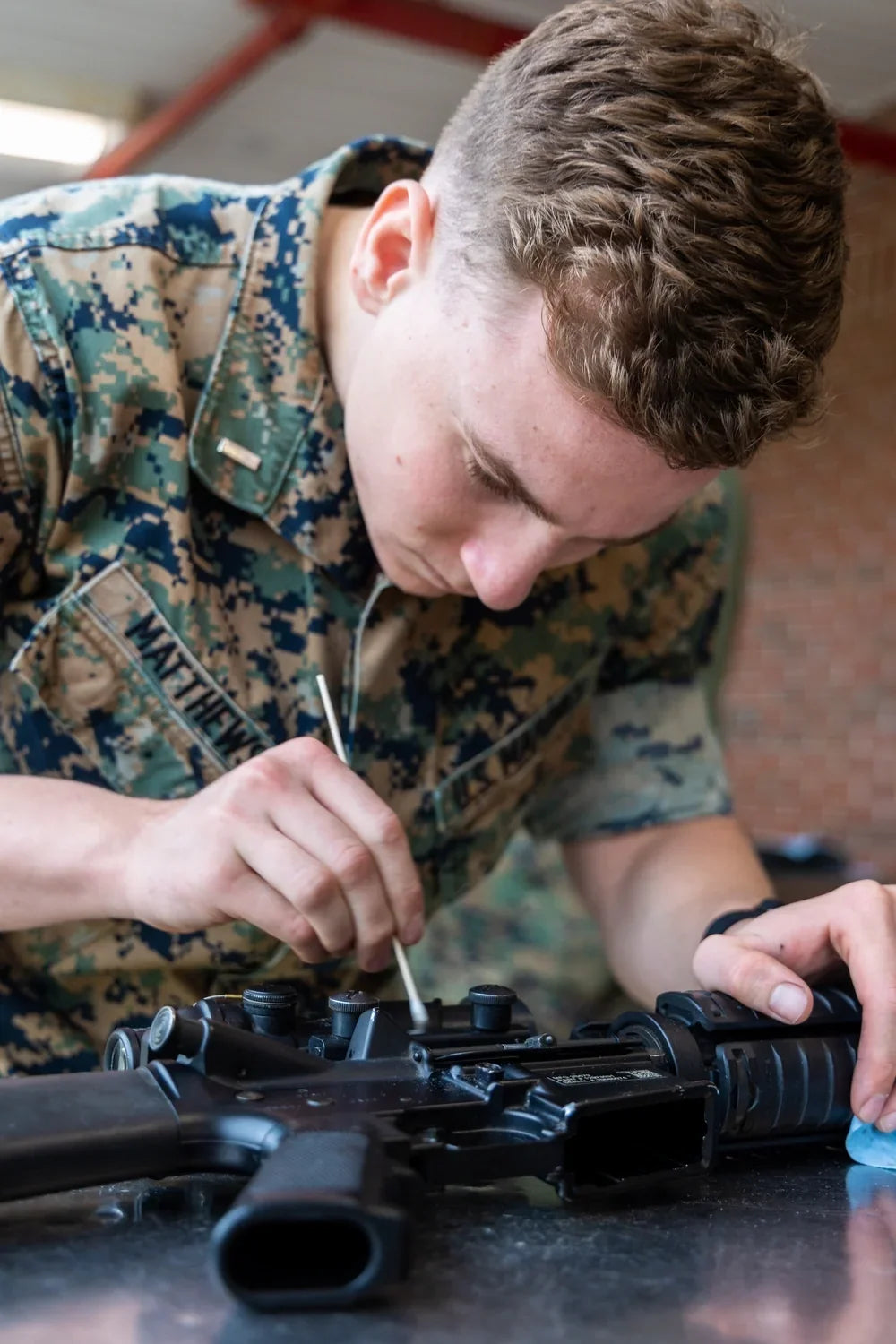
Can You Over Lubricate a Firearm
Too much lubricant can collect debris, migrate into unwanted areas, and hide developing problems.

Yes. A firearm can be over-lubricated. Most modern firearms need a film on selected contact surfaces, not a bath through the entire action. Excess oil may not cause an immediate malfunction on every platform, but it attracts debris, moves under gravity and recoil, and can reach parts that are intended to remain dry.
What excess lubricant does
Oil mixes with carbon, unburned powder, dust, and textile lint. The resulting paste can slow small parts or build in recesses. In a carry pistol, oil may seep into the holster or collect lint around the striker opening. In a rifle, it can migrate into the magazine well, trigger group, stock, or optics. In a revolver, oil under the extractor star can hold residue that prevents the cylinder from closing fully.
Lubricant on ammunition is another concern. Keep cartridges dry and clean. Do not intentionally oil cases or primers, and replace ammunition that has been contaminated or damaged according to the ammunition maker’s guidance.
How to recognize when you have applied too much
The clearest signs are drips, pools in the recesses of the firearm, heavy spray coming from the action during cycling, oil running into the grip or stock, or lubricant appearing on cartridges. A properly applied film may be visible and feel slick, but it should stay on the intended bearing surface. Some firearm manuals call for a wetter action during high-volume firing, so the correct appearance still depends on the design and use.
A controlled application method
Use a small bottle with a narrow tip or place lubricant on a clean patch or swab. Apply one small drop at a time to the points shown in the manual. Spread it across the contact surface, cycle the action several times, and wipe away anything pushed out. This method makes the amount repeatable and prevents aerosol overspray.
Grease requires the same restraint. A thin smear can remain on an exposed rail or locking surface longer than oil, but a thick layer can trap grit and slow movement in cold weather. Never substitute grease for oil unless the firearm or lubricant manufacturer supports that use.
Environment changes the amount
Dust, fine sand, and extreme cold usually reward restrained application and more frequent inspection. Heat and long firing strings may require a product that resists migration or more frequent reapplication. Humid or salty storage conditions need corrosion protection on exposed metal, but that protective film should not become a reservoir inside the action.
Can too much oil cause a malfunction
It can. Excess oil may slow a striker or firing pin when it thickens or carries residue into the channel. It can also trap grit around moving parts or reach cartridges and magazines. The risk depends on the design, product, temperature, and contamination, which is why the manual’s lubrication diagram matters more than a universal number of drops.
Correcting over lubrication
Unload and clear the firearm, field strip it, and wipe away the excess with clean lint-free material. Do not blast the mechanism with compressed air; it can drive liquid and debris deeper and can atomize solvent. Inspect ammunition, the chamber, firing-pin or striker channel, magazines, and wooden stock areas if oil may have reached them. Reapply only the amount specified.
The practical standard is simple: every required friction surface has coverage, and nothing is dripping. If oil keeps returning from an inaccessible area after wiping, have the firearm inspected before relying on it.
Use less and choose the right blend
That coverage-without-dripping standard is exactly where Black Label Reserve HellFire and ColdSnap fit. Either can handle the final lubrication step that might otherwise be assigned to fresh CLP or a general-purpose gun oil. They are dedicated lubricants rather than cleaners, so fouling should still be removed first. Once the firearm is clean and dry, apply a thin film only to the contact points identified in the manual.
HellFire is intended for warm and hot conditions, while ColdSnap is the cold-weather choice when heavier conventional products may become sluggish. Selecting the blend for the temperature gives the lubricant a better chance to remain where it was placed and perform consistently without flooding the action to compensate for the environment.
Only a small amount is needed to cover rails, locking surfaces, pivot points, and other specified friction areas. That controlled application means less runoff, less wasted product, and a bottle that lasts through many maintenance sessions. The result is a purpose-built option that offers dependable performance and a low cost per use—an affordable upgrade for shooters who want more from their lubricant without simply using more of it.
General maintenance information only. Follow the firearm, ammunition, optic, and chemical manufacturers’ instructions. Keep ammunition outside the maintenance area and obtain qualified service when a safety or mechanical issue is uncertain.
Share:
Cleaning Vs. Lubrication - What is the difference?
How to clean carbon buildup from a firearm