Cleaning Versus Lubrication What Is the Difference
Cleaning removes contamination; lubrication controls friction and corrosion. A reliable maintenance routine needs both.

Cleaning and lubrication solve different problems. Cleaner loosens or carries away carbon, old oil, metal fouling, dirt, and moisture. Lubricant leaves a controlled film that reduces friction, limits wear, and may help protect metal from corrosion. Using one product for both jobs can be convenient, but the two functions do not become interchangeable.
What cleaning does
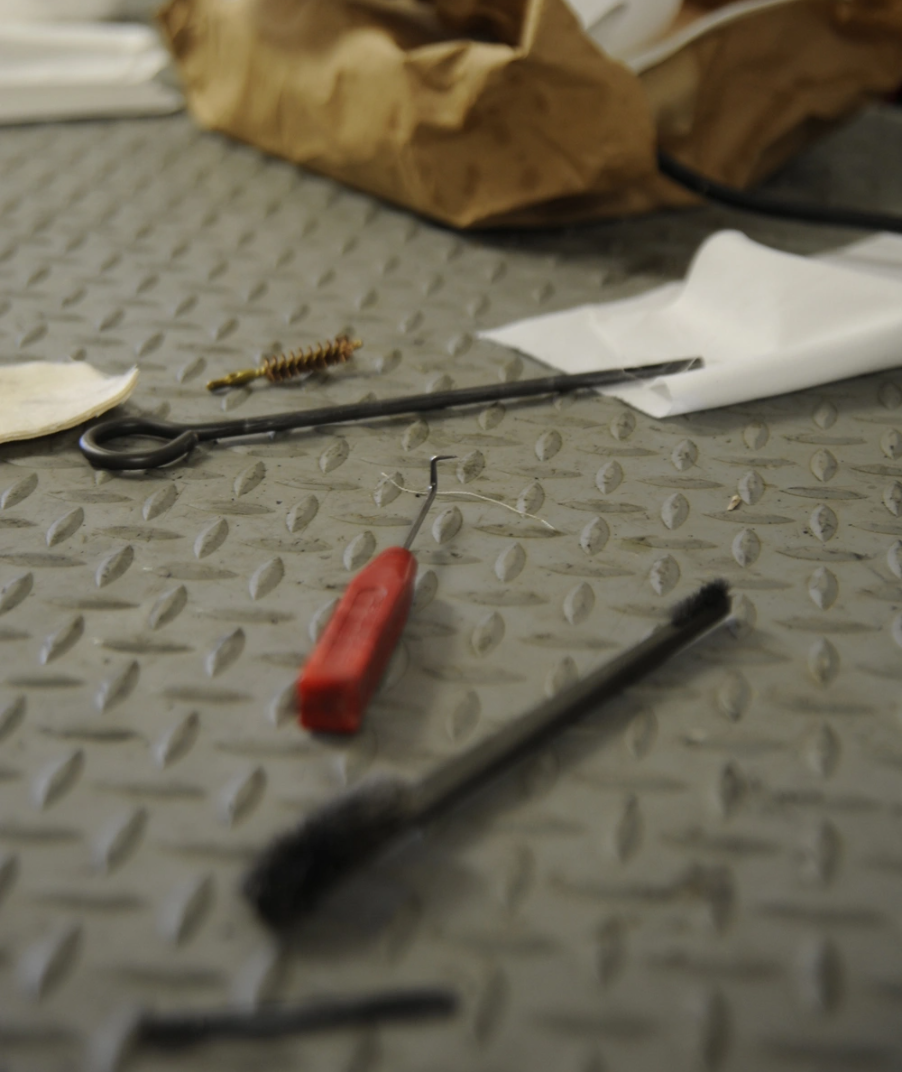
Cleaning begins with physical removal. Patches, brushes, swabs, and cloths lift contamination after the correct solvent has softened it. Bore solvents may be formulated for powder residue, carbon, lead, or copper. Those formulas are not automatically safe for every finish, polymer, stock material, adhesive, or optic. Read the product label and firearm manual, use ventilation, and do not mix chemicals.
A firearm does not have to be stripped to its smallest components for routine cleaning. Field stripping exposes the parts the manufacturer expects the owner to service. Detail stripping should be reserved for the stated interval or a qualified armorer, especially when springs, pins, safety parts, or factory-applied thread locker are involved.
What lubrication does
Lubrication is applied after the surfaces are clean and dry. It creates a boundary layer between moving parts and can leave a protective film on exposed steel. Oil flows into tight contact areas and is common for general use. Grease stays in place longer and may be specified for hinge pins, locking surfaces, or high-load sliding contact. The firearm maker’s instructions decide which is appropriate.
The correct order
First, make the firearm safe and remove ammunition from the work area. Second, field strip it according to the manual. Third, remove loose debris and use the correct cleaner only where needed. Fourth, wipe the parts dry and inspect for cracks, peening, unusual wear, loose fasteners, or corrosion. Fifth, lubricate the identified contact points in the specified amount. Finally, reassemble and complete the manufacturer’s function check.
Why the distinction matters
Adding oil to a dirty action does not remove grit; it creates a slurry that can move through the mechanism. Cleaning every trace of lubricant away and leaving the action dry can increase friction and corrosion. Spraying a combination product everywhere may leave too much fluid in some places and too little durable protection on others.
Think of cleaning as resetting the surface and lubrication as preparing that surface to work. Both steps should be deliberate. A clean firearm with no lubrication may not run correctly, and a heavily lubricated firearm full of old fouling is not properly maintained.
Can CLP do both jobs
A cleaner-lubricant-preservative can handle routine maintenance when its instructions are followed. Use the first application to loosen fouling, wipe the contaminated liquid away, and then apply fresh product to the lubrication points. Leaving dirty CLP in the action is not the same as cleaning and relubricating. Heavy carbon, copper, or long-term storage may still call for a dedicated product.
A repeatable routine
Keep separate clean patches or applicators for solvent and lubricant so dirty solvent does not return to finished parts. Label bottles, close them when not in use, and store them away from heat and children. Record the date when a defensive or stored firearm receives a full inspection. A consistent process makes it easier to notice changes before they become failures.
A purpose-built option for the lubrication step
Once cleaning is complete, Black Label Reserve HellFire or ColdSnap can fill the lubrication role that might otherwise be handled by fresh CLP or a general-purpose gun oil. They are dedicated lubricants, not substitutes for removing fouling, so the process stays straightforward: clean the firearm, wipe the working surfaces dry, and then apply the appropriate blend only to the contact points identified by the manufacturer.
HellFire is the warm and hot condition choice, while ColdSnap is intended for cold-weather use when some conventional products can become sluggish. Choosing a lubricant for the environment avoids asking one compromise formula to perform the same way across temperature extremes. Both are designed to leave a durable film where it is needed without flooding the action.
The practical advantage is that proper application requires only a thin, controlled film. Using a small amount on the specified rails, locking surfaces, pivot points, and other friction areas limits waste, helps each bottle last through many maintenance sessions, and keeps the cost per use low. For shooters who want dependable, temperature-appropriate lubrication without paying a premium for product they do not need to apply heavily, HellFire and ColdSnap are an easy step up from an all-purpose CLP or ordinary oil.
General maintenance information only. Follow the firearm, ammunition, optic, and chemical manufacturers’ instructions. Keep ammunition outside the maintenance area and obtain qualified service when a safety or mechanical issue is uncertain.
Share:
What Firearm Parts Actually Need Lubrication
Can you over lubricate a firearm?