What Parts Actually Need Lubrication
Lubrication belongs on specified friction and locking surfaces, not everywhere inside a firearm.
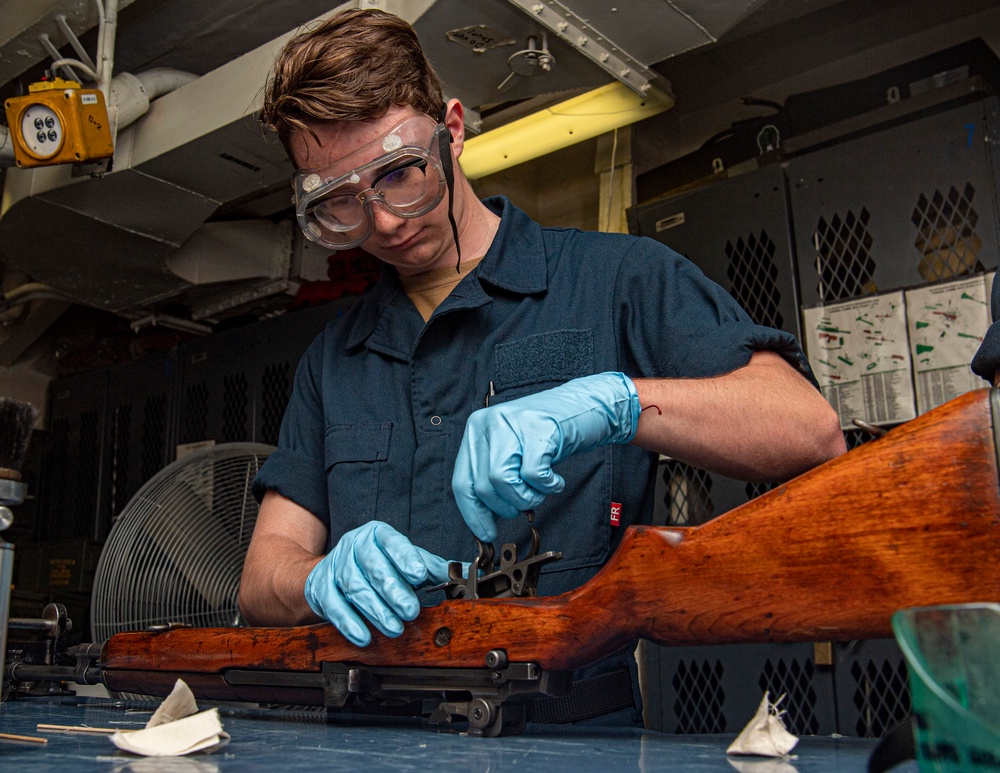
Firearm lubricant belongs where metal surfaces slide, rotate, lock, or bear against one another. It does not belong in every opening. The exact locations and quantity come from the owner’s manual, but the same principle appears across most designs: apply a thin, controlled film to working surfaces and keep ammunition, firing-pin channels, and the chamber free of excess liquid.
Semiautomatic pistols
Common pistol lubrication points include the slide rails, the outside of the barrel where it contacts the slide, the barrel hood or locking surfaces, and the interface identified by the maker where the barrel tilts or rotates. Some pistols call for a small drop on a connector or trigger-bar contact point. Others do not. Use the diagram in the manual rather than flooding the fire-control group.
The bore is normally cleaned and then wiped nearly dry before firing. Oil left in the chamber or bore can collect debris, change cartridge support or pressure conditions, and create an obstruction if enough liquid or material remains.
AR pattern rifles
An AR-pattern rifle generally needs lubricant on the bolt body, gas rings, cam pin, bolt lugs, and the bearing surfaces of the bolt carrier. The charging handle and action spring may receive a light film when the manual calls for it. The bolt carrier group often runs more reliably with visible lubrication than with none, but visible does not mean dripping. Keep oil off cartridges and wipe away pools that can carry carbon into the lower receiver.
Revolvers shotguns and manually operated rifles
Revolvers need restrained lubrication at approved pivot and bearing points. Excess oil under the extractor star can trap unburned powder and prevent the cylinder from closing. Shotgun action bars, hinge pins, locking lugs, and bolt contact surfaces may need a light film or, on some break-action guns, a manufacturer-approved grease. Bolt-action rifles usually need only a light film on bolt raceways, cocking surfaces, and locking lugs if the manual specifies it.
Areas that usually stay dry
Avoid placing lubricant on ammunition, primers, breech faces, firing-pin channels, striker channels, optic lenses, or grip surfaces. Do not spray cleaner or oil into a complete action and assume it reached the right locations. Aerosol pressure can drive contamination into channels that are difficult to inspect.
Oil or grease
Oil is the common default because it spreads easily and reaches close-fitting surfaces. Grease remains where it is placed and may suit approved hinge pins, locking lugs, or slide rails. It can also become sluggish in cold or hold grit in exposed areas. Use grease only where the firearm maker permits it, and never assume that a thicker product provides better protection everywhere.
How much is enough
A useful film looks wet under light but does not run when the part is held vertically. Apply lubricant with a needle bottle, swab, or clean patch, cycle the action, and wipe off what migrates outside the contact area. In dusty conditions, less exposed oil may reduce grit accumulation. In sustained firing, the manufacturer may call for more frequent lubrication. Let the manual and the operating environment set the amount.
Unload and clear the firearm before work. After reassembly, perform the maker’s function check with ammunition in a separate location.
General maintenance information only. Follow the firearm, ammunition, optic, and chemical manufacturers’ instructions. Keep ammunition outside the maintenance area and obtain qualified service when a safety or mechanical issue is uncertain.
Share:
How Often Should You Clean A Firearm
Cleaning Vs. Lubrication - What is the difference?