
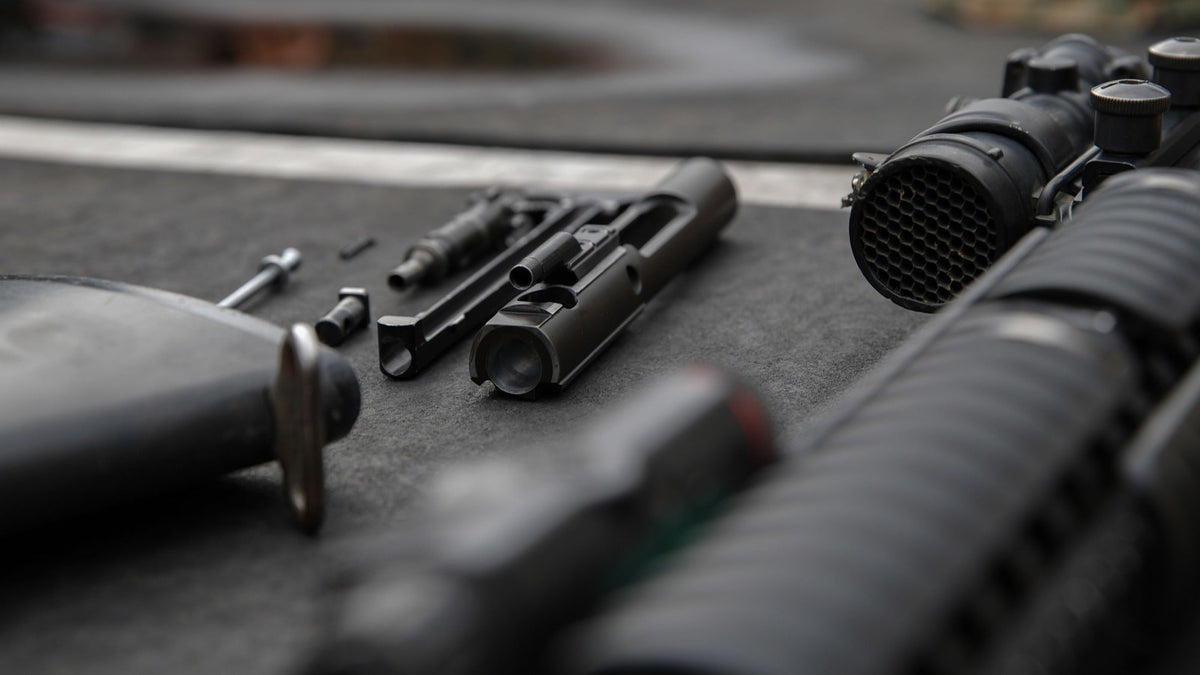
How Often Should You Clean a Firearm
A practical cleaning schedule based on use, exposure, carry conditions, and storage rather than a rigid round count.

There is no single round count that tells every firearm owner when to clean. A better schedule considers what the firearm did, what it was exposed to, and how long it will sit before it is used again. A pistol carried against the body in an Alabama summer may need attention even if it has not been fired. A range rifle used on a dry bench in Arizona may need only a basic inspection and light maintenance after a short session.
Start with the manufacturer manual
The owner’s manual is the controlling reference for disassembly, cleaning products, lubrication points, and inspection intervals. Designs differ. A procedure that is normal for an AR-pattern rifle may be unnecessary or harmful on a striker-fired pistol, revolver, rimfire, or shotgun. If the manual sets a specific interval, follow it before relying on a general rule.
Clean promptly after harsh exposure
Clean and dry the firearm as soon as practical after rain, salt air, sweat, mud, blowing sand, or a sudden temperature change that causes condensation. These conditions can damage metal surfaces and can move debris into places that are normally protected. Corrosive ammunition also requires prompt cleaning with the method specified for that ammunition and firearm; ordinary oil does not neutralize corrosive primer salts.
Use a practical range schedule
After an ordinary range trip, unload the firearm, inspect it, wipe away loose residue, and check the lubrication points. A complete cleaning is sensible when residue begins to affect movement, accuracy, or reliability, or before the firearm returns to long-term storage. High-volume semiautomatic rifles, suppressed firearms, and blowback-operated guns usually accumulate fouling faster than lightly fired manually operated firearms.
Do not chase a perfectly white patch after every short session. Aggressive brushing, excessive solvent, and repeated unnecessary disassembly can create more wear than a modest amount of normal fouling. The goal is a firearm that is safe, protected, and mechanically reliable, not one that looks unused under a bright light.
Carry and defensive firearms
Inspect a defensive firearm on a regular calendar even when it has not been fired. Weekly or biweekly, check for lint, moisture, loose hardware, blocked sights, and visible corrosion. Follow the maker’s guidance before unloading and reloading the same cartridges repeatedly, because repeated chambering can damage a case rim or push a bullet deeper into the case. Perform a more complete cleaning after live-fire practice and any time sweat or rain reaches the firearm.
How long can a firearm go between cleanings
A lightly used firearm may remain serviceable for several range trips, but reliability is not the only concern. Residue can hold moisture, and storage conditions may be harder on steel than firing. If the firearm will sit for weeks, clean and protect it before storage rather than waiting for a round-count milestone. Inspect it again before the next use.
A simple rule that works
Inspect after every use. Clean after dirty or wet exposure. Lubricate when the specified contact points no longer have the required film. Before storage, leave the firearm clean, dry, and protected, then inspect it periodically. That schedule is flexible enough for different platforms without treating every firearm as though it has the same needs.
Always remove the magazine, open the action, clear the chamber, and move ammunition away from the work area before maintenance. Confirm the condition again before touching the trigger or disassembling the firearm.
General maintenance information only. Follow the firearm, ammunition, optic, and chemical manufacturers’ instructions. Keep ammunition outside the maintenance area and obtain qualified service when a safety or mechanical issue is uncertain.
Share:
Why Hot Weather Needs a Different Firearm Lubricant
What Firearm Parts Actually Need Lubrication