
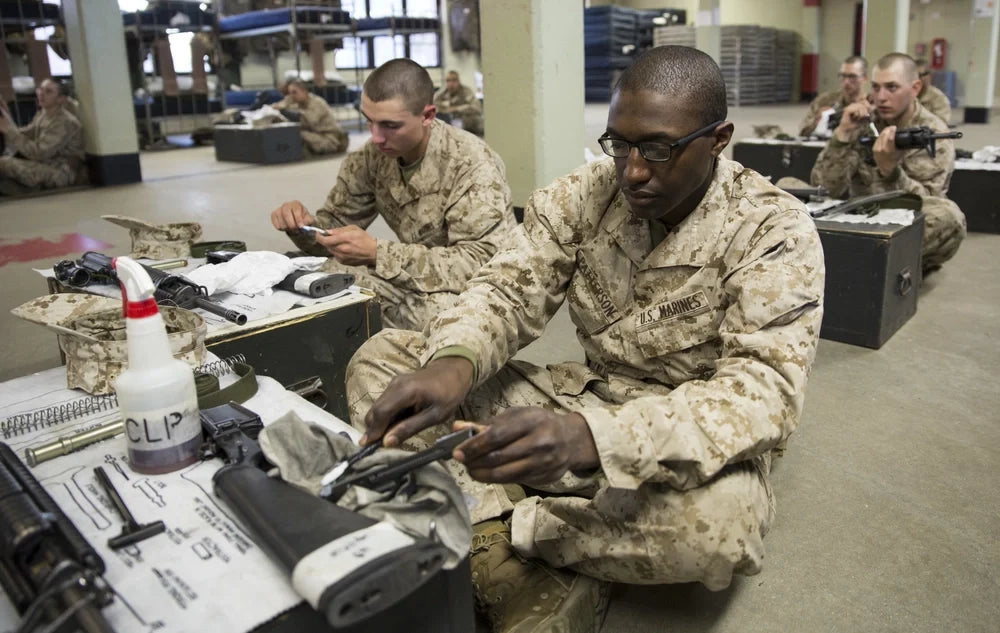
How to Clean Carbon Buildup
Carbon removal works best with time, the right solvent, and gentle tools rather than aggressive scraping.

Carbon buildup is easiest to remove when the solvent is given time to work. Aggressive scraping is rarely the best first step. The goal is to loosen fouling, lift it from the surface, and preserve the finish and dimensions of the part. Start with the firearm manual because some coatings and small components have specific chemical or tool restrictions.
Make the firearm safe
Remove the magazine, open the action, and inspect the chamber and magazine well visually and physically. Move ammunition to another location. Field strip only as far as the manual directs for routine maintenance. Wear eye protection and chemical-resistant gloves, and work in a ventilated area away from sparks or flame.
Let chemistry do the work
Wipe off loose residue first. Apply a firearm-safe carbon cleaner to the fouled area and allow the label’s stated dwell time. Do not let a product dry on the surface unless its instructions expressly permit it. Never mix solvents, and protect polymer, painted, plated, anodized, wood, rubber, and optical surfaces from chemicals that are not approved for them.
For a bore, use the correct-size patch and brush. Clean from the chamber toward the muzzle when the design allows. A bore guide and one-piece coated rod help keep the rod aligned. If cleaning from the muzzle is unavoidable, use a muzzle guide and avoid dragging a bare steel rod across the crown.
Use the least aggressive tool
A nylon brush, cotton swab, patch, or polymer pick handles most softened carbon. A properly sized bronze bore brush may be appropriate when the manual and solvent maker permit it. Avoid hardened steel picks, power tools, household abrasives, and improvised objects that can scratch finishes or round critical edges.
Some black staining will remain on high-heat parts even when loose deposits are gone. A spotless color is not the maintenance standard. On many AR-pattern bolts, for example, discoloration on the bolt tail does not justify grinding or scraping metal away. Remove raised deposits that interfere with movement and inspect the part rather than chasing cosmetic perfection.
Pay attention to common collection points
Carbon commonly accumulates on pistol breech faces, feed areas, barrel hoods, revolver cylinder faces and forcing-cone areas, shotgun gas components, and rifle bolt or carrier surfaces. Keep debris out of firing-pin channels, gas ports, and small spring cavities unless the manual provides a cleaning procedure for them. Do not force swabs into passages where fibers can tear off.
How often should carbon be removed
Remove loose fouling during routine maintenance and address heavier buildup before it affects cycling, chambering, extraction, or accuracy. Suppressed and high-volume firearms may need attention sooner. There is no benefit in allowing hard deposits to grow, but there is also no reason to scrape a surface after normal residue has stopped lifting and the part remains within the maker’s service standard.
Finish with inspection and lubrication
Wipe away cleaner until the surface is dry, then inspect for cracks, erosion, peening, pitting, or unusual shiny wear. Clean the chamber and bore of remaining liquid. Apply lubricant only to the specified contact points and reassemble the firearm. Complete the maker’s function check with no ammunition present.
If hardened fouling will not release without force, stop. A gunsmith or armorer can determine whether the material is carbon, lead, copper, rust, or damaged finish and choose a method that does not sacrifice the part.
General maintenance information only. Follow the firearm, ammunition, optic, and chemical manufacturers’ instructions. Keep ammunition outside the maintenance area and obtain qualified service when a safety or mechanical issue is uncertain.
Share:
Can you over lubricate a firearm?