
ColdSnap: Why Winter Demands Its Own Firearm Lubricant
The lubricant that worked in July may become a problem in January.
Winter exposes every weak point in a mechanical system.
Batteries lose output. Plastics become less forgiving. Metal contracts. Condensation turns into ice. Lubricants that move freely in warm weather become thicker, slower and harder for moving parts to push out of the way.
That matters in any piece of equipment built around close tolerances and repeating mechanical movement. It matters even more in a firearm, where the action has a limited amount of energy available to unlock, cycle, extract, eject, feed and return to battery. Add enough cold-induced drag at the wrong contact point and a reliable firearm can begin to feel sluggish—or stop working altogether.
That is why cold-weather lubrication should not be treated as a marketing category or a different label on the same bottle. It is a real environmental requirement with more than a century of hard lessons behind it.
ColdSnap exists because winter needs its own blend.
What Cold Actually Does to Lubricant
As temperature falls, most liquid lubricants become more viscous. In plain language, they get thicker and resist movement. A product does not have to turn into a block of ice to interfere with a firearm. It only has to become thick enough to create excessive drag between parts that must move quickly and consistently.
Picture the difference between moving a spoon through warm oil and moving it through cold syrup. Both materials are technically still liquids, but the resistance is not remotely the same.
Inside a firearm, that resistance can affect:
-
Slide rails and frame contact points
-
Bolt carriers and receiver rails
-
Locking lugs and cam paths
-
Firing-pin channels and small internal components if over-lubricated
-
Trigger and hammer interfaces
-
Recoil-operated or gas-operated actions already working near their functional margin
The colder the system becomes, the more important lubricant choice and application amount become. A heavy grease that provides excellent staying power in summer may become excessively stiff. An extremely thin general-purpose oil may remain fluid but migrate away from the surfaces that need protection. The winter problem is therefore a balance: remain mobile in the cold without immediately running off, disappearing or leaving critical contact points dry.
That balance is the reason a purpose-built cold-weather blend deserves a place beside a general-use or high-temperature lubricant.
Winter Creates More Than One Problem
Temperature is only part of the equation. Cold-weather firearms move repeatedly between different environments: a heated home, a vehicle, a hunting blind, an outdoor range, a warm case and then subfreezing air.
That movement creates condensation. A cold firearm brought into warm, humid air can “sweat” as moisture collects on and inside the metal. If the firearm returns to freezing conditions before that moisture is removed, the condensation can become ice in the action.
The U.S. Army and Marine Corps cold-region manual specifically warns that condensation formed during a cold-to-warm transition can freeze after the weapon is returned outside and cause stoppages. It also notes that snow or ice melted by the heat of firing can refreeze inside the weapon. ATTP 3-97.11/MCRP 3-35.1D, Cold Region Operations
This is why winter reliability depends on a complete system of care:
-
Use a lubricant appropriate for the expected temperature.
-
Apply it only where the manufacturer directs.
-
Keep snow and ice out of the action and bore.
-
Manage condensation when moving between cold and warm environments.
-
Inspect and function-check the firearm after maintenance.
-
Test the firearm and ammunition combination in the conditions in which they may actually be used.
Cold-weather lubricant is not magic. It cannot fix a damaged part, bad ammunition, packed snow, an obstructed bore or poor maintenance. What it can do is remove unsuitable lubricant as one preventable source of drag and failure.
The Eastern Front: When Winter Turned Machinery Against Its Owners
The winter of 1941–42 on the Eastern Front remains one of history's clearest warnings about taking temperate-weather equipment into extreme cold without adapting it first.
German forces entered the Soviet Union expecting a campaign that would be decided before deep winter. When the cold arrived, they were not properly prepared for it. A U.S. Army Combat Studies Institute examination of the campaign reported that extreme cold made rifles, machine-guns and artillery mechanisms rigid. It also described frozen recoil fluids, cracked steel parts and broken striker components.
The contrast in preparation was decisive. Soviet weapons were designed with winter in mind and maintained with appropriate lubricants. German troops, meanwhile, improvised. They wiped lubricant from weapons, experimented with kerosene and even used sunflower oil where it was available. Kerosene could work temporarily, but it did not provide lasting protection and had to be renewed. By the second winter, the German Army had obtained suitable lubricants—but only after the first winter had delivered the lesson at a brutal cost. U.S. Army Combat Studies Institute, Fighting the Russians in Winter: Three Case Studies
The point is not that lubricant alone decided the campaign. It did not. Training, clothing, shelter, logistics, equipment design and countless other factors shaped the outcome. The lesson is narrower and still important: when a mechanical system is expected to work in deep cold, its lubricant must be selected for deep cold. Familiarity with a product in warm weather does not make it suitable for winter.
Korea: Familiar Maintenance Met Unfamiliar Cold
The same lesson returned during the Korean War.
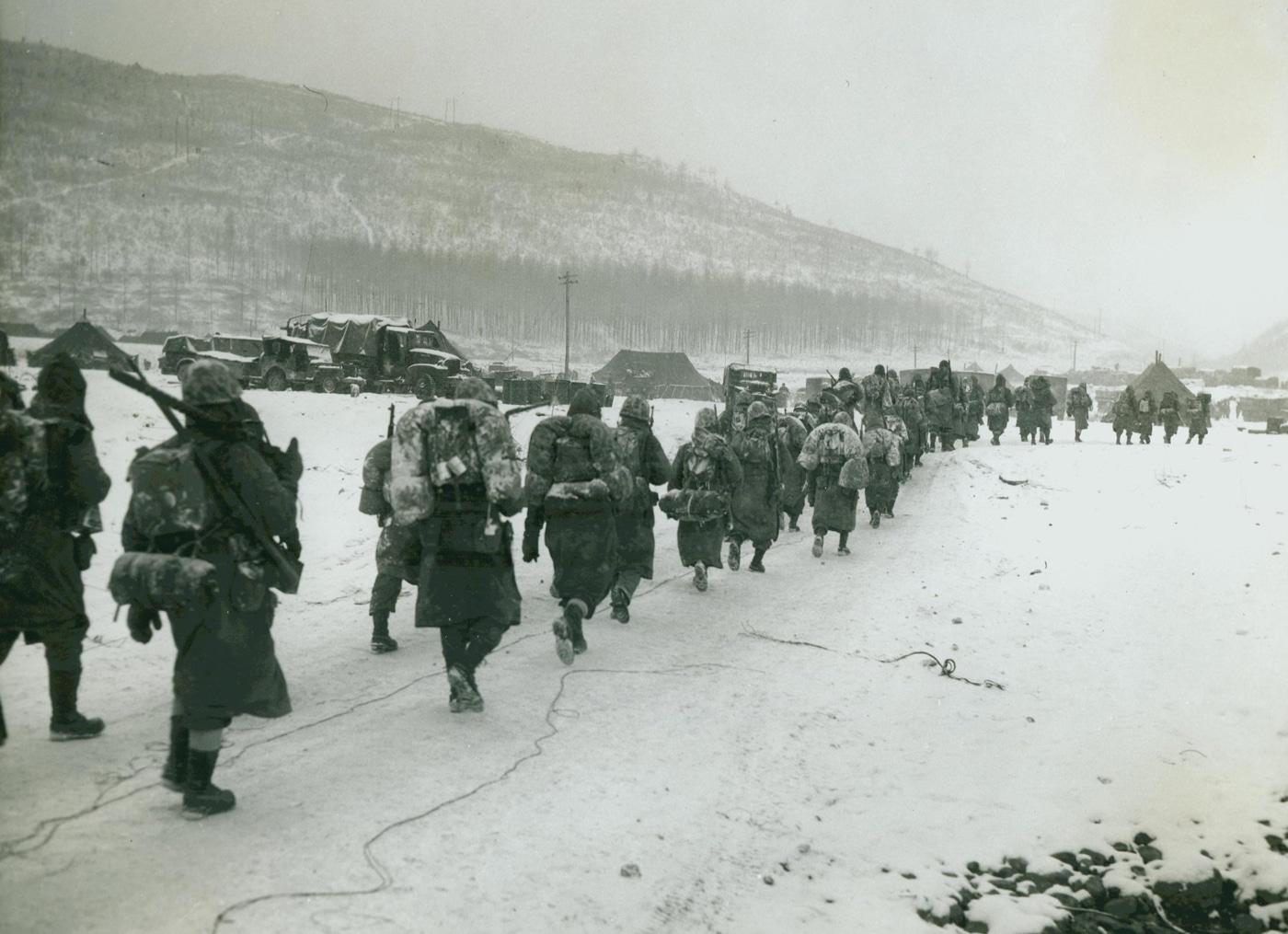
At the Chosin Reservoir in late 1950, Marines fought through bitter subzero conditions. Official Marine Corps history records that even a thin coat of the familiar oil used during normal maintenance could congeal and freeze the weapon's action. The order went out to wipe weapons dry, although Marines debated whether an almost invisible film was still preferable.
The cold did not affect every weapon in the same way. The official account notes that the M1 and M2 carbines experienced feeding, bolt-closure and firing problems, while ice formed in other weapon components and recoil-operated machine guns became sluggish. Weapon design, maintenance, ice, ammunition and lubricant condition all mattered. U.S. Marine Corps History Division, U.S. Marines in the Korean War
That nuance is important. “Just run it dry” was an emergency field response to a product and environment that did not work together. It was not proof that friction and corrosion had stopped mattering. It was proof that the wrong lubricant could become a greater immediate problem than reduced lubrication.
Modern cold-region doctrine reflects the same lesson. It warns that temperate-condition lubricants can thicken enough to produce sluggish action or stoppages and directs personnel to use a dedicated arctic weapons lubricant in extreme cold. In other words, the institutional answer was not to pretend lubrication no longer mattered. It was to use a lubricant designed for the environment.
What Makes ColdSnap Different
ColdSnap was developed around the winter-specific balance between flow and retention.
It uses a controlled-viscosity blend designed to remain workable in freezing and below-freezing conditions while maintaining a protective film on the metal contact surfaces where it is applied. Black Label Precision rates ColdSnap to resist freezing down to -30°F. That rating makes it a cold-weather product—not a claim that every firearm will function at -30°F, and not a substitute for testing your own equipment under safe, controlled conditions.
Its purpose is straightforward:
-
Cold-weather flow: ColdSnap is formulated to avoid the heavy, sluggish feel that unsuitable oils and greases can develop as temperatures fall.
-
Staying power: The blend is designed to adhere to metal surfaces instead of behaving like an ultra-thin oil that quickly migrates away from rails, lugs and other contact points.
-
Water resistance: It provides a protective barrier against the moisture, snow and condensation that are part of winter use.
-
Controlled application: The 1-fluid-ounce bottle includes a precision needle applicator so the user can put a small amount exactly where it belongs instead of flooding the action.
-
Material compatibility: ColdSnap is intended for common firearm metals, finishes and polymer components when used as directed.
-
American production: ColdSnap is mixed and bottled in the United States by Black Label Precision, a veteran-owned company built around practical equipment rather than empty claims.
ColdSnap is not trying to be a miracle solvent, a universal shop chemical and a winter lubricant at the same time. It was built to answer one practical question: what should you put on a firearm when the temperature falls below freezing but the lubricant still needs to remain on the working surfaces?
Staying Power Matters—Even in the Cold
The easiest way to keep an oil fluid at low temperature is simply to make it extremely thin. That solves only half the problem.
A lubricant that flows away from the contact point, leaks into the case or requires constant reapplication does not provide much field value. Cold-weather performance requires a usable film after the firearm has been carried, stored, handled and cycled—not just impressive movement inside a cold bottle.
ColdSnap is built to retain that film without relying on the heavy consistency of a conventional grease. That matters on hunting rifles carried for hours, defensive pistols exposed to repeated temperature changes, AR-platform rifles used at winter ranges and suppressed firearms that experience rapid transitions between a hot action and freezing ambient air.
The goal is not to coat every internal surface. The goal is to place a small, persistent amount on the friction points identified by the firearm manufacturer.
Why ColdSnap Is a Practical Value
Cold-weather readiness should not require a shelf full of boutique chemicals.
A full 1-fluid-ounce bottle of ColdSnap is currently $19.99 and includes a needle applicator for controlled use. Because proper firearm lubrication normally requires drops rather than ounces, a bottle can support many maintenance cycles when it is applied correctly. Less overspray, less runoff and less wasted product mean the buyer is paying for lubricant that reaches the firearm—not lubricant left in a rag or pooled in a case.
For field carry or for someone who wants to try the formula first, the ColdSnap Mini Tubes five-pack is currently $9.99. Each sealed 2 mL tube provides a compact option for a winter range bag, hunting pack, vehicle-support kit or maintenance pouch.
ColdSnap is not positioned as the cheapest liquid on the shelf. It is positioned as an affordable, purpose-built tool. The value comes from getting cold-weather flow, surface retention, water resistance and controlled application in one winter-specific product without paying for an oversized kit or a collection of products that were designed primarily for different conditions.
That is a more honest measure of value than comparing bottle price alone.
How to Transition a Firearm to Winter Lubrication
Do not simply pour a cold-weather product on top of a heavy summer lubricant. The mixture can retain the characteristics you were trying to remove.
Before winter use:
-
Unload and clear the firearm completely. Remove ammunition from the work area and follow the manufacturer's safety procedures.
-
Consult the owner's manual. Lubrication points and quantities differ by firearm.
-
Remove old lubricant and accumulated fouling. Pay particular attention to rails, bolt assemblies, cam paths and other moving interfaces.
-
Allow the components to dry. Do not trap cleaner or moisture beneath fresh lubricant.
-
Shake ColdSnap before use. Apply a small amount to the manufacturer-specified contact points.
-
Cycle the action manually. This distributes the lubricant and helps reveal abnormal drag.
-
Wipe away excess. More lubricant is not automatically more protection, especially around firing-pin channels, ammunition, chambers and areas where excess product can collect debris.
-
Function-check the firearm according to its manual. Then verify performance with the intended ammunition in a safe, lawful and controlled setting.
Never apply lubricant to ammunition, and never leave excess lubricant in the chamber or bore before firing. Keep the bore clear of snow, ice and other obstructions.
Why It Belongs in the Range Bag or Everyday Kit
Most people do not need a gallon of arctic weapons oil. They need a small, controlled amount of the right lubricant available when weather changes the maintenance problem.
That makes ColdSnap useful in:
-
A winter range bag
-
A hunting pack
-
A gunsmithing or cleaning kit
-
A vehicle-support kit where legal and appropriate
-
A competition maintenance pouch
-
An emergency equipment bin
-
A compact everyday gear kit for tools and mechanisms that accept this type of lubricant
The full bottle belongs on the workbench or in the primary range kit. The sealed Mini Tubes are the better choice when size, weight and spill resistance matter.
The reason to carry either one is simple: winter problems rarely wait until you are standing beside the maintenance bench.
The Lesson Winter Keeps Teaching
History does not say that one bottle of lubricant wins battles. It says that environmental preparation matters, familiar equipment behaves differently in extreme cold and small maintenance decisions can become major reliability problems when conditions remove every margin for error.
Soldiers on the Eastern Front learned it. Marines in Korea learned it. Modern cold-region doctrine still teaches it.
The oil that works in July is not automatically the oil you should trust in January.
ColdSnap was built for the months when ordinary lubricants can thicken, moisture can freeze and mechanical drag becomes more than an inconvenience. It delivers cold-weather flow without giving up the staying power needed on working surfaces, in a compact American-made format that does not require breaking the bank.
Winter changes the problem. Change the lubricant before the temperature makes the decision for you.
Shop ColdSnap Cold Weather Firearm Lubricant
Sources and further reading
-
U.S. Army and U.S. Marine Corps, Cold Region Operations, ATTP 3-97.11/MCRP 3-35.1D
-
U.S. Army Combat Studies Institute, Fighting the Russians in Winter: Three Case Studies
-
U.S. Marine Corps History Division, U.S. Marines in the Korean War
Publication note
Historical references are included for education and do not imply endorsement by the U.S. Department of Defense, U.S. Army, U.S. Marine Corps or any firearm manufacturer. Product performance can vary by firearm, ammunition, maintenance condition and environment. Always follow the firearm manufacturer's instructions and observe all applicable safety rules and laws. Cover photo: U.S. Marines fighting in the frozen terrain of Korea. Official USMC photograph by Sgt. Frank C. Kerr. Public domain.
Share:
Gun Oil vs. Firearm Lubricant: What’s the Difference?